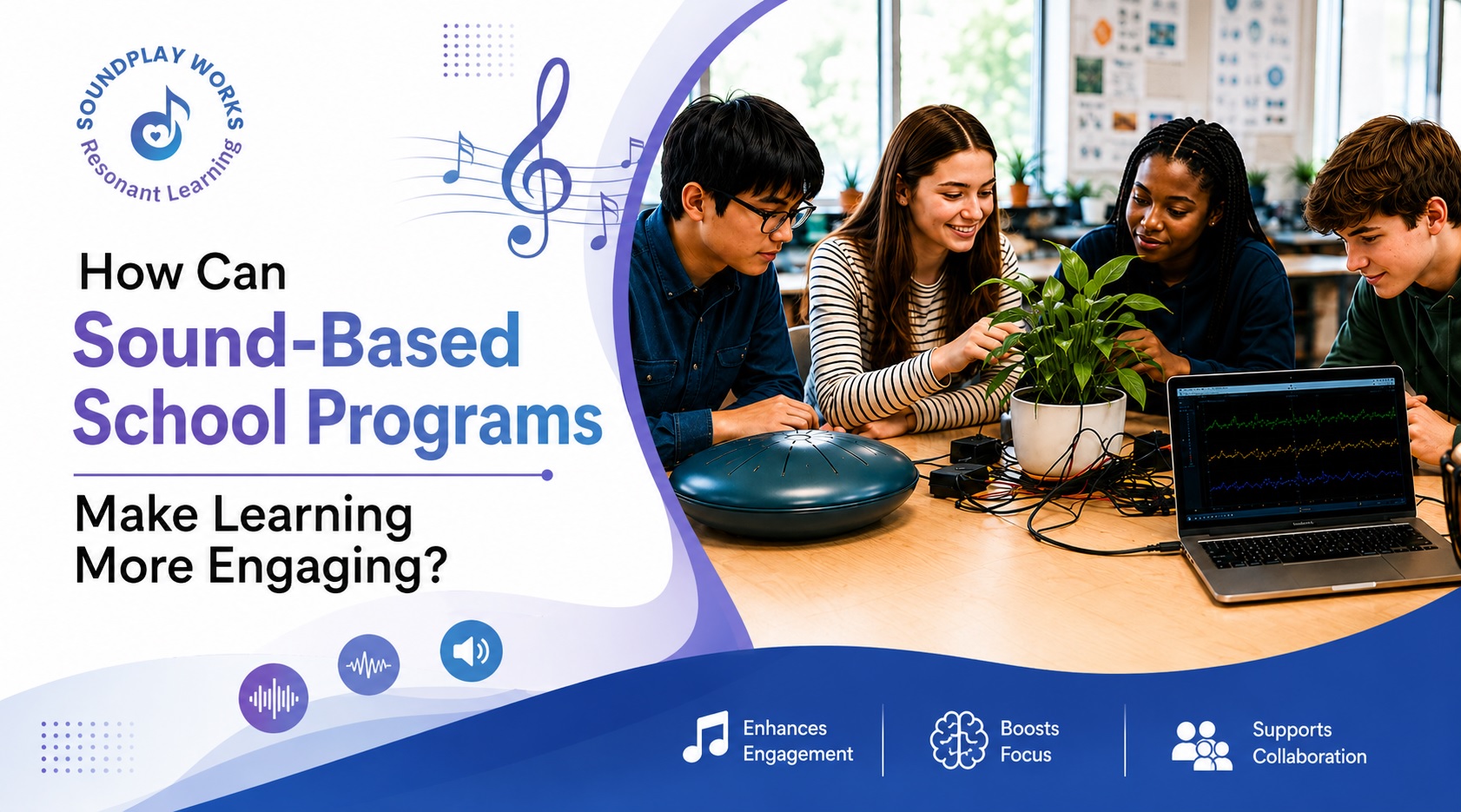
Summary: Sound-based programs can make learning more engaging in many ways. They can turn students from listeners into participants. These programs can support focus, calm, and emotional awareness.
—————————————————————————–
Keeping students engaged can be challenging when learning relies heavily on listening, reading, or traditional classroom activities. What if students could hear, feel, explore, and participate in the learning experience? Sound-based school programs in Hamilton offer an interactive way to bring learning to life. When combining sound, rhythm, movement, breath, storytelling, and hands-on exploration, these programs can encourage curiosity and support focus, creativity, and connection.
Ways Sound-Based School Programs Encourage Student Engagement
Turn Students from Listeners into Participants
Students are naturally more engaged when they have an opportunity to do something, rather than only watch or listen. Sound-based programs can involve interactive instruments, body-tapping rhythms, humming, movement, and hands-on sound exploration. Our educational wellness organization gives students opportunities to explore instruments such as flutes, gongs, ocean drums, and rainsticks. Ask students, “What do you think this instrument will sound like before you hear it?” That simple question transforms listening into curiosity and encourages students to participate actively.
Connect Learning with the Senses
Learning becomes more memorable when students can connect ideas to real experiences. Sound naturally provides opportunities to explore vibration, frequency, rhythm, movement, and environmental acoustics. Our organization incorporates these concepts through sensory-rich experiences and connects sound exploration with areas such as science, music, arts, and STEAM learning. Instead of simply explaining vibration in a textbook, students can hear and experience how sound behaves.
Support Focus, Calm, and Emotional Awareness
Engagement is not only about excitement. Students also need to feel calm and focused to participate. Our experts integrate practices such as breathwork, body tapping, humming, and mindful sound experiences to support awareness and regulation. Our school programs help students develop focus and classroom readiness. They also help create opportunities for emotional awareness. A short breathing or sound activity can help provide a useful transition between classroom activities.
Create Opportunities for Connection and Creativity
Learning can become more meaningful when students experience it together. Group sound activities encourage students to listen to one another, participate collectively, and explore creative expression. Professionals describe group soundplay as a way to build connection, empathy, and teamwork. Students can experiment with rhythm, respond to sounds, create patterns, or participate in a shared sound experience.
Sound-based programs bring together sound, movement, mindfulness, sensory exploration, and creativity. Rather than treating engagement as simply keeping students quiet and attentive, these experiences invite students to become active participants in what they are learning.
We hope you find this blog useful. However, if you have any queries, reach out without delay.
Recent Posts

12 September, 2026
01 September, 2026
25 August, 2026

17 August, 2026